.png?width=135&height=41&name=DSS-Lockup-Black-RGB%20(1).png "DSS, Inc. Logo")
GovLoop: The Hidden Bottleneck in Federal Health IT Modernization Is Not Compliance
IT modernization
Cybersecurity
HealthIT
Artificial Intelligence
Cloud Computing
Federal Health IT
Zero Trust
08/20/2026

Key Takeaways
- Why do federal health IT modernization efforts often slow down?
Many organizations blame compliance requirements, but architectural decisions often create the biggest barriers to modernization. Rebuilding security and governance capabilities across individual applications can introduce unnecessary complexity, delay deployments, and slow innovation. - What is an architecture-first approach to compliance ?
Rather than implementing compliance separately within every application, organizations can embed security, governance, authentication, and auditing capabilities into a shared architectural foundation, creating greater consistency while reducing redundant engineering effort. - Why does architecture matter for AI and future modernization?
Cloud adoption, Zero Trust, interoperability, and AI all depend on trusted, scalable infrastructure. Organizations that invest in strong architectural foundations today will be better positioned to adopt emerging technologies while maintaining security and operational resilience.
In a recent guest article published in GovLoop, Eric Bullion, deputy chief architect for research and development at DSS, Inc., explores why compliance is often blamed for slowing federal health IT modernization when the real challenge lies in the underlying architecture.
As agencies accelerate cloud adoption, Zero Trust implementation, interoperability initiatives, and AI readiness, many continue to treat compliance as something each application must solve independently. According to Eric, that approach leads to duplicated effort, inconsistent security implementations, and unnecessary barriers to modernization.
Looking Beyond Compliance
For years, many organizations have approached compliance as an application-level responsibility, requiring development teams to repeatedly implement similar security, authentication, auditing, and governance capabilities across multiple systems.
Eric explains how an architecture-first approach shifts that mindset by embedding those capabilities into a shared foundation. Rather than recreating the same functionality for every application, organizations can build a common infrastructure that improves consistency, reduces complexity, and allows development teams to focus more on delivering mission outcomes.
Building a Stronger Foundation for Modernization
As federal health IT environments become more interconnected, architectural consistency is becoming increasingly important. Shared foundations help simplify integration, improve interoperability, and create a more consistent security posture across enterprise environments.
Rather than rebuilding the same capabilities with every new application, agencies can establish common services that support modernization efforts over the long term. This approach not only improves efficiency but also creates more scalable foundation for introducing new technologies as mission requirements continue to evolve.
Preparing for the Next Generation of Federal Health IT
The article also examines why architectural decisions are becoming increasingly important as agencies pursue cloud migration, Zero Trust implementation, interoperability, and artificial intelligence.
While much of the AI conversation focuses on new cases, successful adoption depends on trusted data, secure integration, consistent governance, and scalable infrastructure. Organizations that invest in these foundational capabilities today will be better positioned to modernize, innovate, and deploy emerging technologies with confidence.
As federal health organizations continue balancing cybersecurity, operational resilience, and patient care, architecture is becoming a strategic advantage rather than a simply a technical consideration.
Read the full article on GovLoop to learn why architecture, not compliance, may be the hidden bottleneck in federal health IT modernization. To learn more about how DSS is helping federal health organizations build secure, scalable, and AI-ready technology foundations, please click here.
Related Posts

Patient Safety Awareness Week 2026: Protecting Veterans Through Cyber Resilience and High Reliability
03/09/2026
2 min read
How the DSS Health Cloud strengthens patient safety by embedding FedRAMP High .
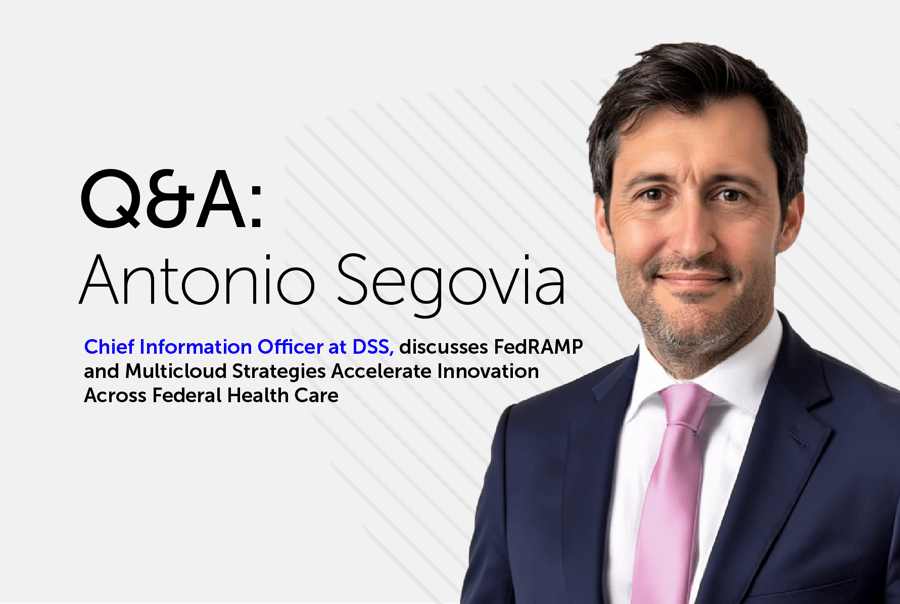
Q&A: FedRAMP and Multicloud Strategies Accelerate Innovation Across Federal Health Care
01/12/2026
4 min read
DSS Health Cloud enables agencies to innovate faster while opening the door fo.